
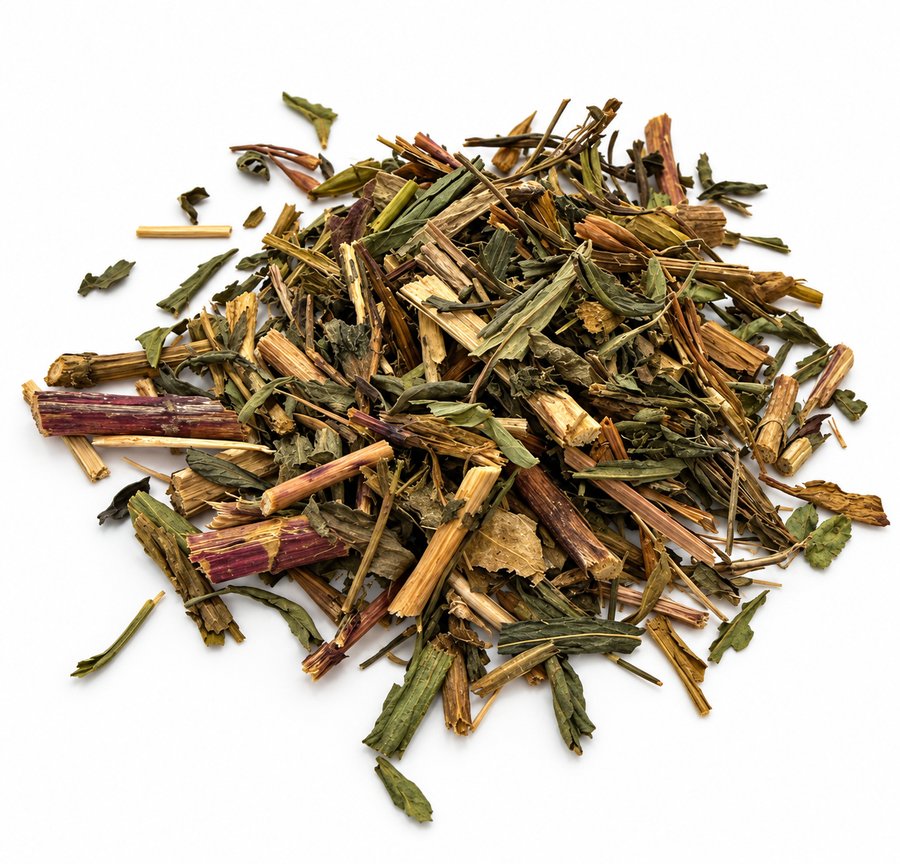
Mexican tarragon, also called yauhtli, gets sold online as an ancient Aztec dream herb. The historical record does not actually say that. The Mexica used it as incense, as ritual medicine, and as an offering tied to the rain gods, and chemical analysis has even found its residue in incense burners recovered from the Templo Mayor. What is missing is any surviving account telling people to drink it before bed to intensify their dreams.
That claim lives almost entirely in the modern herbal internet, where yauhtli is now described as a plant for deeper, more vivid, sometimes lucid dreams. Sellers and dream-work guides recommend it as a tea, burned as incense, or smoked before sleep to lift recall or push toward a more visionary state. The evidence behind those claims is muddy, but it is specific enough to test.
The plant does contain pharmacologically active compounds, and animal studies suggest calming, sedative, and anxiety-reducing effects involving serotonin and GABA signaling. What does not exist is any human study measuring its effect on REM sleep, dream recall, vividness, or lucidity. That gap is the entire reason it was worth a run. Even if the Aztec dream-herb story is mostly modern mythology, a sedating plant could still shift sleep architecture, change awakenings, or move the ability to remember dreams.
The protocol was deliberately plain: two grams brewed as a tea before bed, seven nights back to back, no journaling and no technique. I tracked recall, vividness, emotional intensity, lucidity, and sleep quality throughout.
Nothing moved. Recall sat at baseline, vividness sat at baseline, emotional intensity was unremarkable, and no lucid dream occurred on any night. Sleep quality did not noticeably change either, which is the mildly surprising part given the sedative signal in the animal work. Across the full week there was no build-up effect and no acute effect worth noting.
Filed as a complete null. On this protocol, at this dose and preparation, Mexican tarragon did nothing measurable to dreaming. If anything it is a reminder that being named in a tradition, or being sold as a dream herb, is not evidence of an effect. On the current data it is hard to justify calling yauhtli an oneirogen at all. A higher dose or a different preparation could be tested later, but there is no signal here that argues for it.